
Struggling with acne? Visit a trusted Epiderma Skin and Hair Clinic in Jayanagar for advanced and personalized treatments. At a reputed Skin Clinic in Jayanagar, Dr. KC Dharam Kumar, recognized as the Best Dermatologist in Jayanagar, provides effective solutions for both male and female acne concerns.
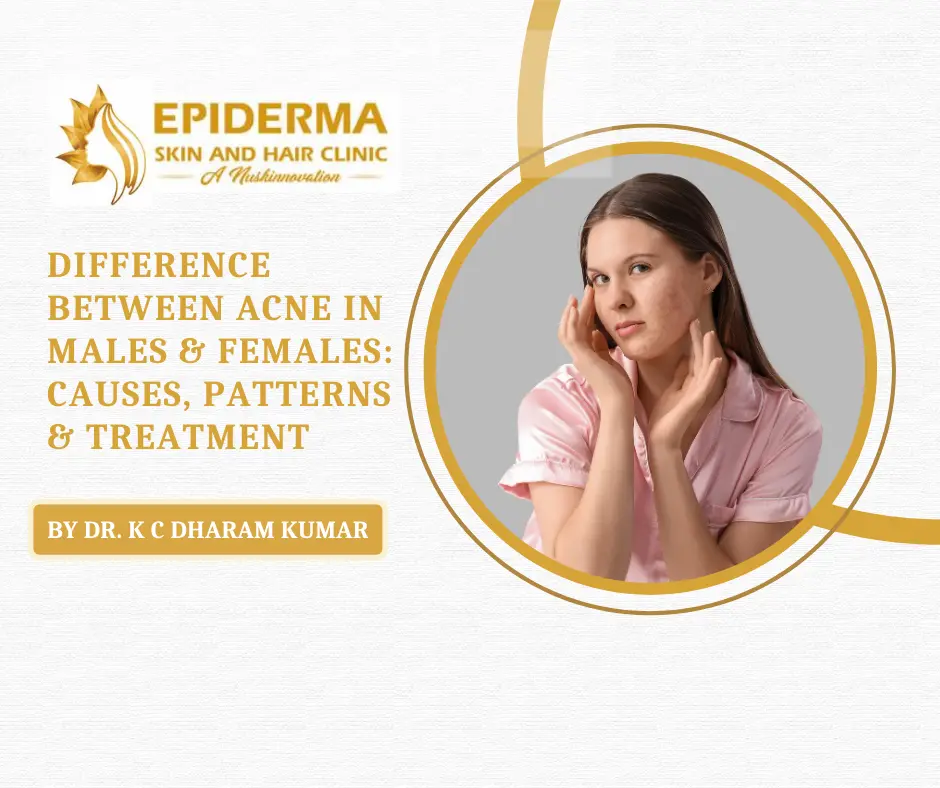
Acne is one of the most common skin conditions affecting both men and women, but the causes, patterns, and treatment approaches differ significantly. Understanding these differences helps in choosing the right skincare routine and medical treatment.
In this blog, we’ll explore how acne behaves differently in males and females, along with expert-backed solutions.
What is a Hair Transplant?
A hair transplant is a cosmetic surgical procedure in which healthy hair follicles are taken from one part of the scalp (usually the back or sides of the head) and transplanted into areas where hair thinning or baldness has occurred.
The transplanted hair follicles continue to grow naturally in the new area, making the results long-lasting and natural-looking.
What is Acne?
Acne is a chronic skin condition that occurs when hair follicles become clogged with oil (sebum), dead skin cells, and bacteria. It can appear as:
- Whiteheads
- Blackheads
- Pimples
- Cysts
Key Differences Between Acne in Males & Females
1. Hormonal Influence
- Males: Acne is primarily driven by androgens (testosterone), which increase oil production. Teenage boys often experience more severe acne due to higher hormone levels.
- Females: Acne is more influenced by hormonal fluctuations during:
- Menstrual cycles
- Pregnancy
- PCOS (Polycystic Ovary Syndrome)
Female acne often worsens before periods (known as cyclical acne).
2. Severity of Acne
- Males: Tend to have more severe and widespread acne, especially on the face, chest, and back.
- Females: Usually experience mild to moderate acne, but it can be persistent and recurring.
3. Location of Breakouts
- Males:
- Forehead
- Nose
- Chest & back
- Females:
- Chin
- Jawline
- Lower cheeks
Jawline acne in women is strongly linked to hormones.
4. Skin Thickness & Oil Production
- Males: Thicker skin with larger sebaceous glands → more oil → higher risk of severe acne.
- Females: Thinner skin but more sensitive → prone to inflammation and post-acne marks.
5. Adult Acne Trends
- Males: Acne reduces after adolescence in many cases.
- Females: More likely to experience adult acne, even in their 30s and 40s.
6. Lifestyle & External Factors
- Males:
- Sweating (gym, outdoor activity)
- Shaving irritation
- Females:
- Cosmetic products (makeup)
- Stress
- Hormonal imbalance
Treatment Approach: Male vs Female Acne
Treatment for Male Acne
- Oil-control face washes
- Retinoids
- Oral medications for severe acne
- Lifestyle changes (hygiene, diet)
Treatment for Female Acne
- Hormonal therapy (if needed)
- Anti-androgen medications
- Gentle skincare products
- Stress management
Dermatologists often personalize treatments based on gender, age, and severity. So, consult Dr. KC Dharam Kumar, the Best Dermatologist in Jayanagar, at a top-rated Skin Clinic in Jayanagar for customized acne treatments that target the root cause.
Expert Dermatologist Insight
Dr. KC Dharam Kumar – Senior Dermatologist & Skin Specialist in Bangalore
- Experience: 15+ Years in Dermatology Practice
- Patients Treated: 5,000+ successful cases
- Expertise: Acne treatment, advanced skin therapies, pigmentation, and laser dermatology
Dr. Dharam Kumar the Best Dermatologist in Jayanagar emphasizes:
“Acne differs significantly between males and females due to hormonal and physiological variations. A personalized treatment plan is essential for long-term skin health and prevention of recurrence.”
Frequently Asked Questions (FAQs)
1. Why is acne worse in males than females?
Acne is often more severe in males due to higher testosterone levels, which increase oil production and clog pores.
2. Why do females get acne on the jawline?
Jawline acne in females is typically caused by hormonal fluctuations, especially during menstrual cycles or conditions like PCOS.
3. Can adults get acne even after teenage years?
Yes, adult acne is more common in females due to hormonal changes, stress, and lifestyle factors.
4. Is male acne harder to treat than female acne?
Male acne can be more severe, but female acne may be more persistent. Both require customized treatment plans.
5. Does shaving cause acne in men?
Shaving can irritate the skin and worsen acne if not done properly or with unclean tools.
6. Do makeup products cause acne in females?
Yes, comedogenic (pore-clogging) makeup products can trigger acne. Choosing non-comedogenic products helps reduce risk.
7. What is the best treatment for hormonal acne in women?
Hormonal acne may require treatments like oral contraceptives, anti-androgen medications, and dermatologist-guided skincare. So, achieve acne-free skin with expert guidance from the Best Dermatologist in Jayanagar – Dr. KC Dharam Kumar at our Best Skin Clinic in Jayanagar.
8. Can diet affect acne in both males and females?
Yes, high sugar, dairy, and processed foods can trigger acne in both genders.
9. How long does acne treatment take to work?
Most treatments show improvement within 4–8 weeks, but complete results may take 3–6 months.
10. Can acne be permanently cured?
Acne can be effectively controlled, but it may recur depending on hormonal and lifestyle factors.
Conclusion
While acne affects both men and women, its causes, patterns, and treatments differ significantly. Understanding these differences ensures better skincare choices and faster recovery.
For long-lasting results, always consult an experienced dermatologist in Jayanagar, Bangalore and follow a personalized treatment plan. Book your consultation today at a top Skin Clinic in Jayanagar. Dr. KC Dharam Kumar, widely regarded as the Best Dermatologist in Jayanagar, offers result-driven treatments at a trusted Skin Clinic in Jayanagar.